

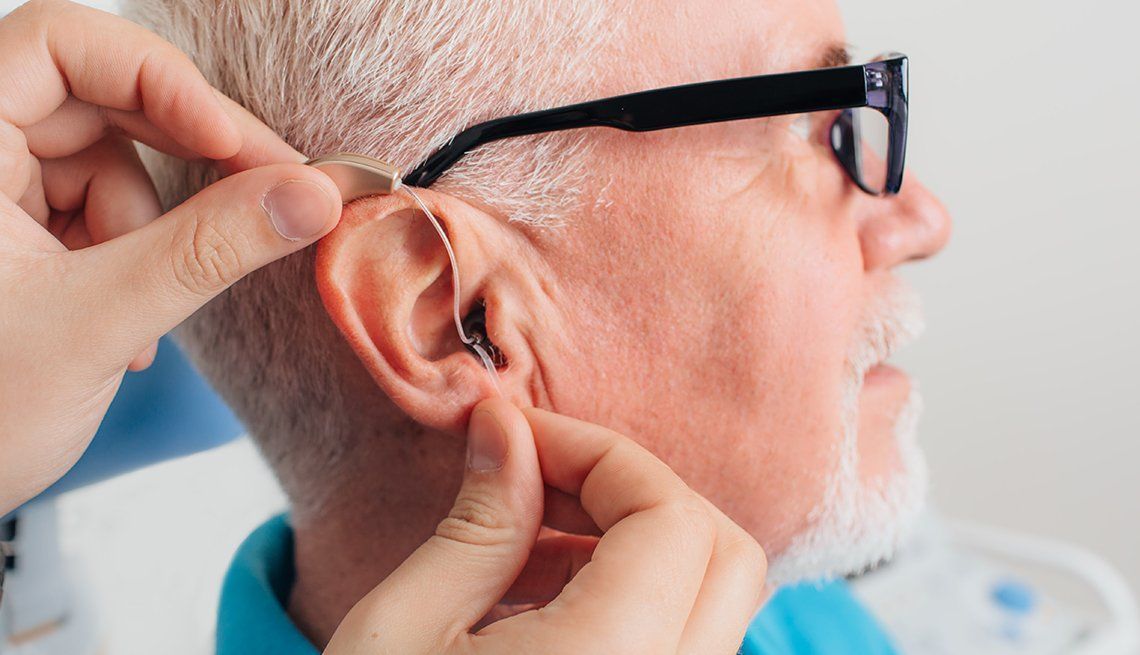
Hearing: What Do You Need to Know?

April 27, 2023

Share this article

“Everyone mumbles.” or “if everyone spoke more clearly, I wouldn’t have a problem.” Have you thought or said either of those sentences before? If you have worked around industrial noise or find yourself over the age of 55, there is a good chance you have. But why? Surely it couldn’t be a reduction in hearing. Or could it?


One of the most common misconceptions about hearing is that if it changes, you’ll know it. The truth is, in most cases, you probably won’t unless you get it checked. A reduction in hearing can be sneaky. It usually progresses slowly and usually involves higher pitches first. Both of these factors mean other people will probably notice you’re having difficulty before you do.


Many people think that a reduction in hearing is like turning the volume down on the TV. It isn’t. When we lose our hearing from noise or age, for example, the part of our ear responsible for hearing higher pitches is what is damaged first. This leaves us with more of a problem related to clarity, than loudness. In other words, you may find yourself saying, “I heard you, I just didn’t understand you.” In speech, vowel sounds (oo, ee, ah) are low pitched and are what gives us the power or volume. Consonant sounds (p, t, k, s, sh) are high pitched. They are the ones affected first in most hearing losses. Unfortunately, they are also the sounds we need to understand one word from the next. That phenomenon is also why you may be able to hear the traffic on the highway outside, but yet can’t hear the TV or your spouse every time.


So what are you supposed to do if you or someone in your life suspects you have a reduction in hearing? Well the good news is a hearing test is quick and painless. Depending who you see it may even be free of charge. What you will want to make sure of is that the test is comprehensive and thorough. There should be at least 5 or 6 procedures performed in that visit to even begin to come up with some answers. The “beep test” alone is not good enough.


 If the test results show some degree of hearing reduction, it is important to be educated completely about what your options are. If the results show that your hearing can be improved medically or surgically (about 15-20% of hearing losses), then you will be referred to your family doctor or an ENT (ear, nose, throat surgeon). If your hearing loss is permanent (age, noise, etc.) then you may be a candidate for hearing aids. A competent clinician should prescribe and dispense hearing aids with honesty and integrity. You should not feel as though you are being sold something, but rather that you are being cared for as you would be with your dentist, optometrist, etc. If you choose to adopt hearing aids into your life, you should know that you will undergo a trial period for the first 30-60 days. During that time, if you feel that your needs aren’t being met, you should have the option to return them, hopefully without charge. The hearing aid process should be a positive one in which you are able to work with your clinician to improve your conversations, relationships and overall quality of life.

Recent Posts

April 27, 2023
I am occasionally asked by family who live in other provinces if I can “sell” them a hearing aid to save them money. I understand that hearing aids are an expensive proposition, but I have refused every time and referred them to excellent colleagues. My explanation is always the same. I tell them, “Who you see will make a bigger difference than what you get.” My family will need follow up and aftercare that I can’t deliver when they don’t live in Alberta. As a result, even though my own mother wears hearing aids, I am not her Audiologist.  We should never lose sight of the fact that hearing aids fall squarely under health care but it can be a confusing experience, with a lot to lose. It may be worthwhile to consider a few tips in finding the right professional.
April 27, 2023
“Biology is better than technology….” That’s a phrase I seem to repeat on a daily basis in my Audiology practice. In fact, I say it so much, I recently had a patient tell me I should trademark it! When it comes up in our clinical counselling, what I am usually stressing is that we need to protect our hearing, because once it’s gone, it’s gone. There is no medical or surgical method that can reverse the effects of noise damage. When that is the case, hearing aids are the only option for improved communication. But that is where my phrase comes from, because normal hearing is better than aided hearing, and aided hearing is not normal. My point is that we all need to learn how to preserve what hearing we have, so we don’t have to use hearing aids sooner than expected.

May 7, 2022
The primary goal for your first visit with an Audiologist should be to diagnose the hearing loss with an intent to consider the medical components of the loss. This will be accomplished through a series of tests designed to identify “site of lesion,” meaning where in the ear the loss is occurring, which in turn leads us to whether medical referral is necessary. A skilled audiologist can identify hearing losses that may be best treated medically or surgically and refer to ear, nose and throat (ENT) specialists (also called otolaryngologists). About 15-20% of hearing losses have the potential to be solved medically or surgically, without the use of hearing aids. Remember, in Alberta, an Audiologist carries the designation that allows direct referral to the ENT physician, whereas a Hearing Aid Practitioner cannot. You should know the difference. Hearing health care is a team effort between the Audiologist and Otolaryngologist much like vision/eye care is a team effort between Optometrists and Opthamologists, with similar roles and responsibilities.