
Biology is Better Than Technology: Protecting Your Hearing

April 27, 2023

Share this article

“Biology is better than technology….” That’s a phrase I seem to repeat on a daily basis in my Audiology practice. In fact, I say it so much, I recently had a patient tell me I should trademark it! When it comes up in our clinical counselling, what I am usually stressing is that we need to protect our hearing, because once it’s gone, it’s gone. There is no medical or surgical method that can reverse the effects of noise damage. When that is the case, hearing aids are the only option for improved communication. But that is where my phrase comes from, because normal hearing is better than aided hearing, and aided hearing is not normal. My point is that we all need to learn how to preserve what hearing we have, so we don’t have to use hearing aids sooner than expected.


Noise-induced hearing loss is really the only type of hearing loss that can reliably be prevented. In Central Alberta, it is a very real and widespread concern. With the number of blue collar jobs that sustain our local economy, it puts a large number of people at high risk for permanent hearing loss. Occupational health and safety only legislated protection from noise in the late 1980’s, but even now, there are workers that continue to be at risk for hearing loss, due to improper or inadequate protection from noise. I used to fly a lot for a previous job and I would always observe the ground crew faithfully wearing their hearing protection, but it seemed more often than not, that the earplugs were not inserted properly and therefore not offering any protection from the noise they were exposed to.


Sometimes, improved counselling and instruction is all that is required to improve safety compliance and effectiveness. Other times though, a different strategy for hearing protection is needed and a basic foam earplug just isn’t the answer. To determine what the best solution is for you, we have to consider what it is that you do and what the requirements are. Is it industrial noise? Are you a musician? Are you a hunter or sport shooter? Each of these activities require very different solutions for noise protection.


We also have to consider what we call “dose.” Noise is damaging from a combination of factors, including the loudness and time exposed. Industry calculates that we can safely withstand 85 dBA of noise for 8 hours unprotected. For every doubling of sound pressure (roughly 3 dB), we have to cut the time in half. So if the noise is 88 dBA, then 4 hours is safe, 91 dBA, 2 hours is safe, and so on. However, we also have to consider a unique form of noise induced hearing loss called acoustic trauma. These are sounds that are so loud, the effects are instantaneous. Firearm use would be a common example of this. For example, a shotgun blast can be 140 dB, which can do instant damage. In fact, that intensity of sound is above our pain threshold. The only reason we don’t necessarily perceive it as painful is because it is of short duration. But never the less, the damage is done.


 Every problem has a solution and step one in solving the problem of hearing protection is consulting your Audiologist. If you are a musician, there are earplugs that can maintain the fidelity of your music without distortion. If you are a hunter/shooter, there are earplugs that allow you to hear properly and activate instantly at the moment you shoot. More commonly, if you work in noise, there are earplugs that can be custom fit to you, easy to wear and even filtered specifically to allow communication while still protecting from noise. Simply put, everyone’s situation is different and requires a solution specific to that person and that situation.

Recent Posts

April 27, 2023
“Everyone mumbles.” or “if everyone spoke more clearly, I wouldn’t have a problem.” Have you thought or said either of those sentences before? If you have worked around industrial noise or find yourself over the age of 55, there is a good chance you have. But why? Surely it couldn’t be a reduction in hearing. Or could it?
April 27, 2023
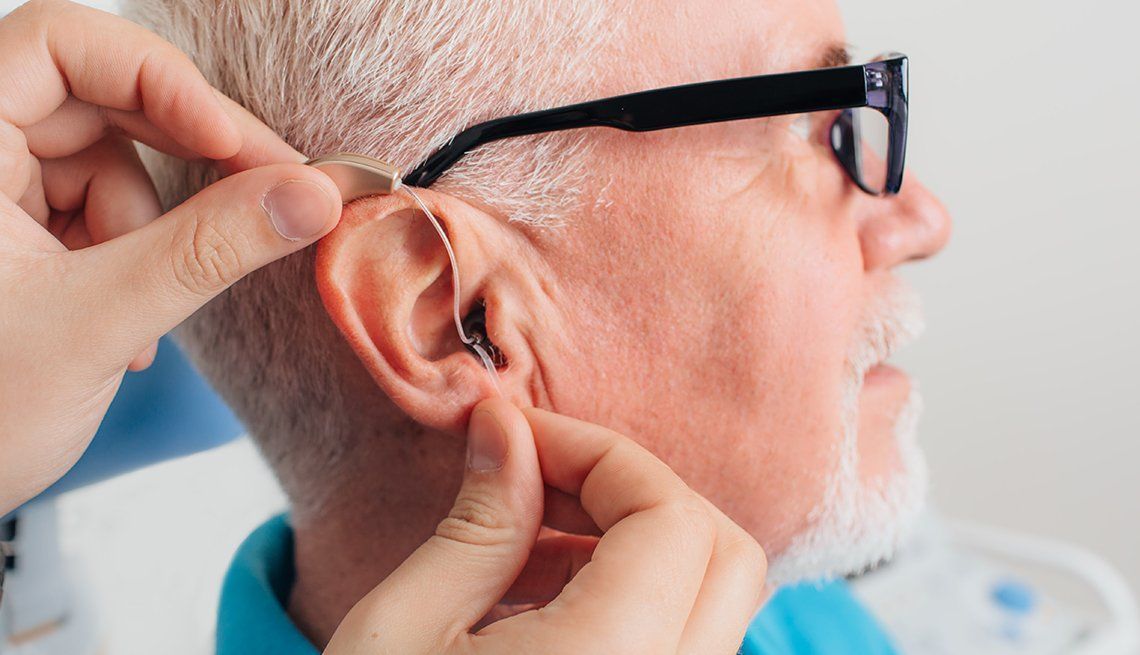
I am occasionally asked by family who live in other provinces if I can “sell” them a hearing aid to save them money. I understand that hearing aids are an expensive proposition, but I have refused every time and referred them to excellent colleagues. My explanation is always the same. I tell them, “Who you see will make a bigger difference than what you get.” My family will need follow up and aftercare that I can’t deliver when they don’t live in Alberta. As a result, even though my own mother wears hearing aids, I am not her Audiologist.  We should never lose sight of the fact that hearing aids fall squarely under health care but it can be a confusing experience, with a lot to lose. It may be worthwhile to consider a few tips in finding the right professional.

May 7, 2022
The primary goal for your first visit with an Audiologist should be to diagnose the hearing loss with an intent to consider the medical components of the loss. This will be accomplished through a series of tests designed to identify “site of lesion,” meaning where in the ear the loss is occurring, which in turn leads us to whether medical referral is necessary. A skilled audiologist can identify hearing losses that may be best treated medically or surgically and refer to ear, nose and throat (ENT) specialists (also called otolaryngologists). About 15-20% of hearing losses have the potential to be solved medically or surgically, without the use of hearing aids. Remember, in Alberta, an Audiologist carries the designation that allows direct referral to the ENT physician, whereas a Hearing Aid Practitioner cannot. You should know the difference. Hearing health care is a team effort between the Audiologist and Otolaryngologist much like vision/eye care is a team effort between Optometrists and Opthamologists, with similar roles and responsibilities.